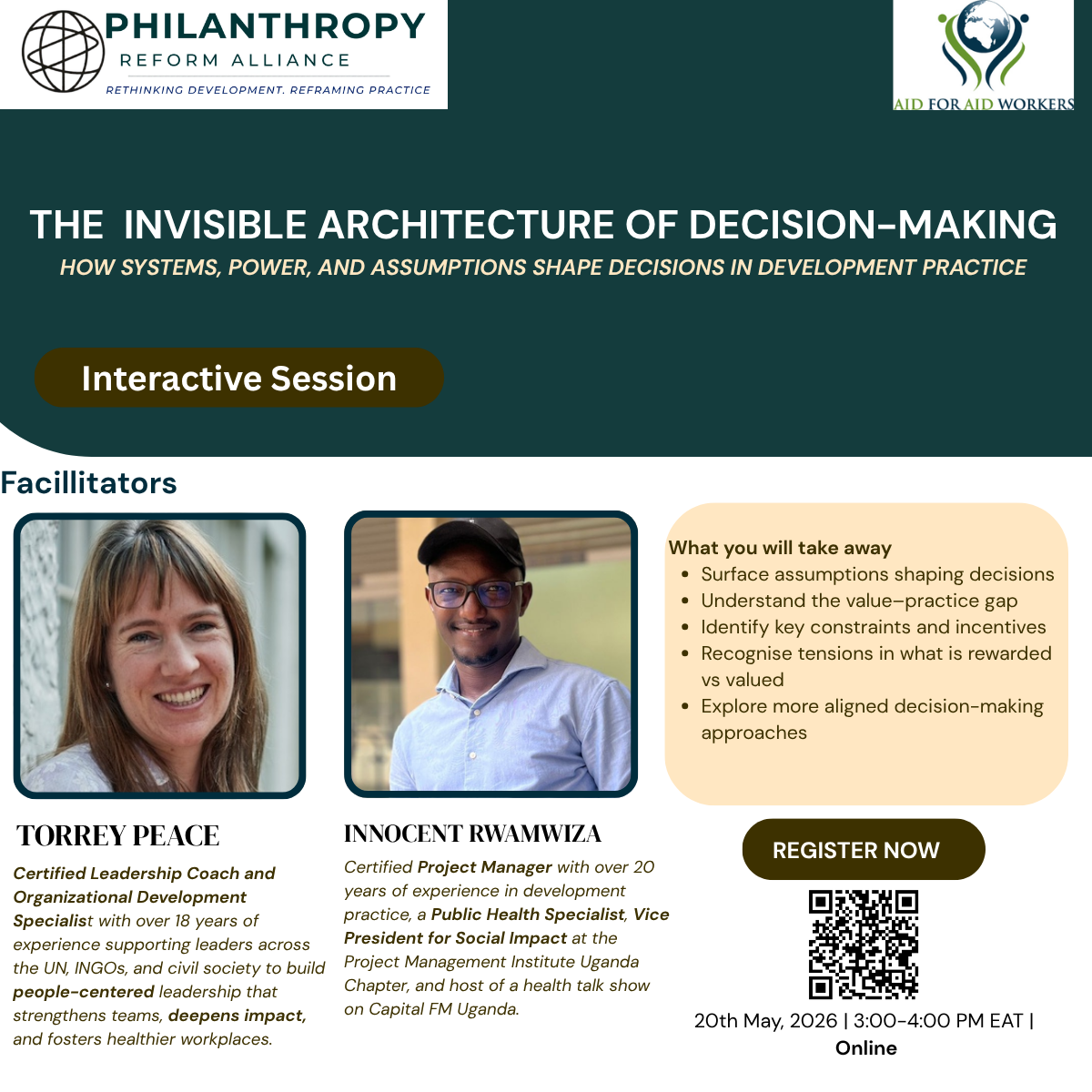
The Invisible Architecture of Decision-Making: How Power, Privilege, and Assumptions Shape Decision-Making in Development Practice
May 20 - May 20, 2026 · 3:00 PM - 4:00PM
How Power, Privilege, and Assumptions Shape Decision-Making in Development
Development decisions are often presented as technical, evidence-based, and neutral. But beneath every strategy, funding choice, partnership arrangement, or programme design are deeper forces that shape what becomes possible, whose priorities are centered, and whose knowledge is considered legitimate.
This session invites participants to critically explore the often-unseen architecture behind decision-making in development. How do power, privilege, institutional incentives, and inherited assumptions influence the decisions we make—and the ones we do not? Who gets to define problems, set priorities, manage risk, and determine what “success” looks like?
Through a reflective and practice-based discussion, we will examine how colonial legacies, organisational cultures, donor expectations, and professional norms continue to shape development practice in subtle but powerful ways. Rather than focusing only on systems “out there,” the session also encourages us to reflect on our own roles within these systems—and how we might begin to practice differently.
What to Expect
A short framing presentation introducing the theme and key questions
Guided reflection on how decision-making operates in practice
Honest dialogue on power, privilege, incentives, and institutional culture
Space to question familiar assumptions and explore alternative approaches
Interactive discussion grounded in lived experience across the development sector