Reframing Humanitarian and Development Practice | Reimagining Giving
We are building a network of people in philanthropy, development and humanitarian work who are unlearning the colonial, extractive and paternalistic habits that still shape how we give, fund and partner, and creating partnerships rooted in mutuality, Solidarity and shared flourishing.
PRA strategic plan 2025-2028
ReadWhy reform

The gap between rhetoric and practice
The language of localization, equity, participation, and trust has become increasingly common. Yet the systems through which decisions are made, resources are allocated, and legitimacy is conferred have changed far more slowly

The legacies we still carry
The Legacies We Still Carry Coloniality remains embedded in funding models, organisational cultures, partnerships, and knowledge systems, shaping how funding is structured, whose expertise is trusted, how partnerships work, and whose knowledge is valued.

A sector under pressure to change
Business as usual is becoming harder to sustain. Shrinking aid budgets, growing humanitarian needs, and rising expectations for locally led action are exposing the limits of existing models. We need more than incremental change. We need to rethink how power, resources, relationships, and accountability work.
The challenges facing philanthropy and development are deeply interconnected, but they are not insurmountable. Systems do not change simply because policies evolve or funding shifts—they change when people choose to think differently, relate differently, and work differently.

Our Response: The PRA ecosystem
We believe lasting reform begins with how we work together.
Collaborative Unlearning
Rethinking the assumptions behind practice. We create spaces for practitioners and organisations to examine inherited ideas about power, expertise, partnership, and progress — and experiment with different ways of working.
Then KIN solidarity network
KIN connects people and organisations through solidarity, reciprocity, and accompaniment — creating relationships where knowledge and expertise is mutually beneficial
The KIN fund
Moving resources closer to where change happens. KIN provides flexible, trust-based financing that gives locally rooted organisations greater agency to define priorities, make decisions, and steward resources in ways that respond to their realities.
Practice based Learning
Democratizing knowledge through practice: We value lived experience, practitioner insight, collective reflection, and evidence generated through practice.
Our Philosophy
People Transform Systems
Change begins with people: Systems are shaped by the people within them. Lasting change begins with how we think, relate, make decisions, and lead — and with the everyday practices that shape institutions from within.
Practice Brings Values to Life
What we believe must shape how we work: Equity, localisation, and justice mean little if they do not change how decisions are made, partnerships are formed, resources are shared, and accountability is practiced.
Trust Makes Local Leadership Possible
Trust is the foundation of meaningful partnership: Local leadership grows through relationships grounded in humility, reciprocity, and shared accountability
Our Reach
Members
Development practitioners engaging in collaborative unlearning for practice change
Organisations
Organisations rethinking practice and engaging in collaborative unlearning with us
Geographic footprint
Distribution of organisations engaged in rethinking development practice.
Learn More
PRA at a glanceReflections and Feedback
It did not occur to me that unlearning should be a big part of my growth as well. But today reminded me that growth is not only about learning new things; sometimes, it is equally about unlearning what we have long accepted as normal, a much needed conversation, especially in the development space. One of my biggest takeaways was the importance of embracing a kinship mindset in development work. It was a priceless afternoon of unlearning and learning, with a clear reminder that transforming systems begins with transforming the way we think.
Ruth Munyari
Leadership & Governance Programs Strategist: Kenya
Through the Labs, I am learning that Trust is the foundation upon which good partnerships are made. When trust exists, this leads to open conversations and greater understanding of different perspectives. This allows decisions to be made collaboratively, even if, officially, the power dynamics give one partner more authority than the other. I am reading about trust-based philanthropy more and will try to focus on what that can mean for Egyptian NGOs. It would be lovely to have longer sessions in the future because there is such a rich experience that we can learn from 😀
Yasmine D'Alessandro
Egypt
I am unlearning the assumptions, power dynamics, and long-standing ways of doing things that have shaped development practice. I am moving away from the comfort of top-down decision-making toward shared ownership, where local voices are not just included but genuinely valued. Through this process, I am learning that transparency and collaboration are not optional; they are essential to how I work, decide, and build with others.
Mamta Rao
Broken Chalk - India
One of the strongest reflections from the session was the recognition that decision-making is often shaped by power and control over resources. While many organisations describe decision-making as “bottom-up,” the reality is that decisions are frequently influenced by those who hold funding and institutional power. Many of us, consciously or unconsciously, align our decisions with the priorities of those in positions of authority.
Moses Wanami
CFAO Mobility- Kenya
Let’s Connect
If you are curious about our work, exploring partnership with PRA, or interested in becoming an Associate Member, we would be glad to hear from you. We welcome conversations with practitioners, organisations, and funders who are seeking alignment, shared learning, and more relational approaches to development and philanthropy.
Schedule a ConversationLatest Articles
October 13, 2026
The Third Wave: Why African Governments Can't Afford to Ignore AI Philanthropic CapitalThe question is no longer whether philanthropic capital will shape Africa's health systems, because it will, but who gets to set the terms.
Read More →
August 16, 2026
The real test for decolonial philanthropy: What are we actually willing to unlearn?Unlearning should eventually become visible in the way a funder makes decisions, in who participates in setting priorities, in how risk is understood, in how flexible funding can be, in whether local organisations can influence the agenda, in how feedback moves through a relationship and in what happens when a community says, “This is not working.”
Read More →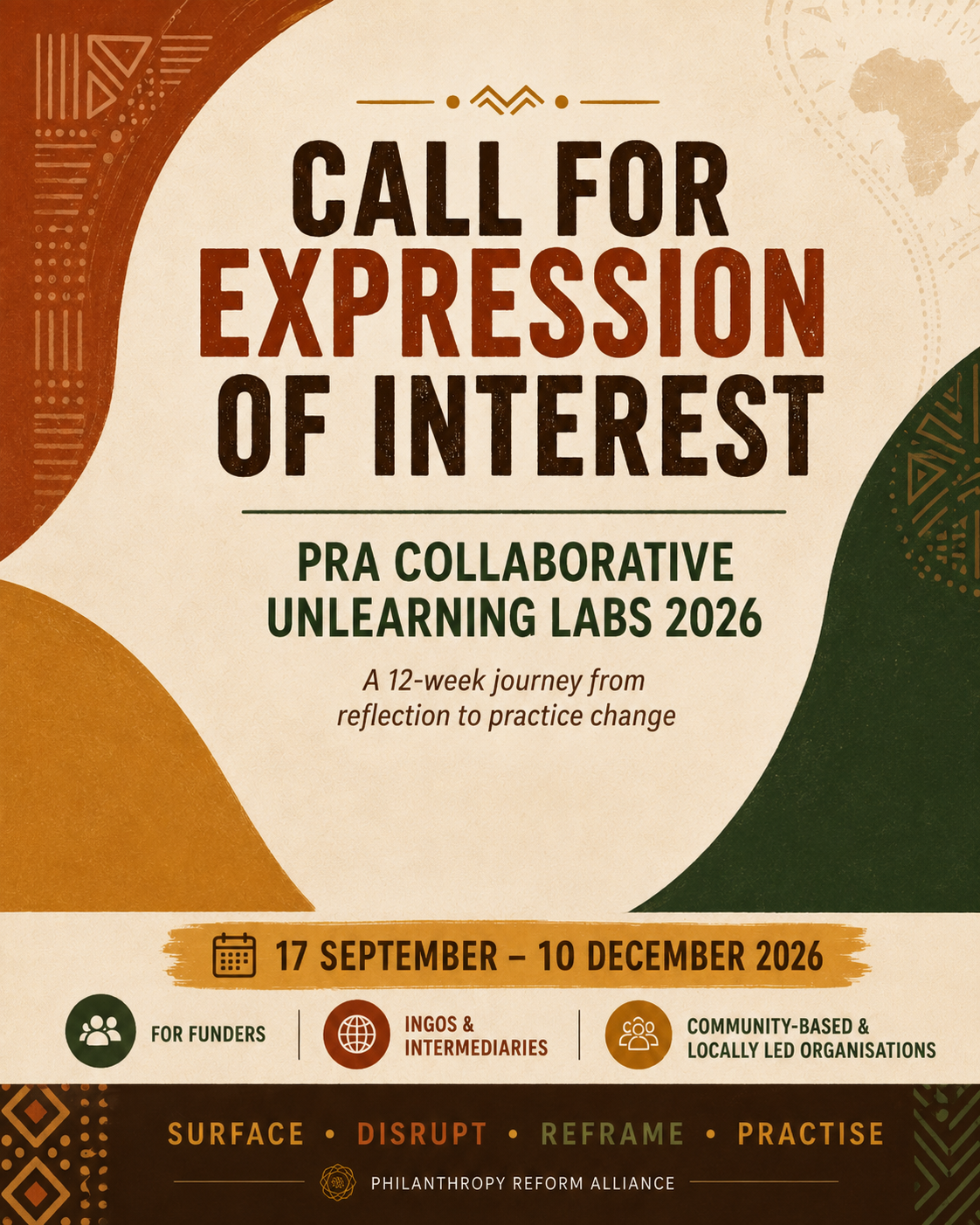
August 6, 2026
CUL Cycle 2 prospectusEvery development system carries a history. The partnerships we build, the institutions we strengthen, the evidence we privilege, the risks we manage, and even the language we use are shaped by assumptions inherited over generations. Some of these assumptions have enabled progress. Others continue to reproduce unequal relationships, concentrate decision-making, and distance development from the communities it seeks to serve.
Read More →